
Chargeback Prevention for Adult Websites & Platforms
Chargeback prevention for an adult business is not one fraud setting or one “safe ratio.” It is an operating system that starts before the payment, continues through subscription support and pre-dispute alerts, and ends with a deliberate choice to refund, accept or represent a dispute.
The practical goal is to reduce avoidable disputes without blocking good customers or fighting every chargeback automatically. Adult subscriptions, privacy-sensitive billing descriptors, recurring payments and card-not-present fraud make this especially important for paysites, creator platforms, cams, dating services and NSFW AI products.
If you are still choosing a processor or merchant-account setup, start with our adult payment processing comparison. This guide assumes compatible card processing is already live or close to launch and focuses on what happens after that.
Quick answer: build chargeback control in five layers
| Layer | What to do | Main problem it addresses | What to measure |
|---|---|---|---|
| 1. Billing clarity | Make price, rebilling, cancellation, support and the statement descriptor easy to understand. | “I did not recognize this” and subscription confusion | Support contacts, cancellations, refunds, descriptor-related disputes |
| 2. Fraud controls | Use the processor's screening, 3DS where appropriate, velocity/duplicate controls and risk signals. | Stolen-card and account-abuse transactions | Approval rate, fraud declines, authenticated vs non-authenticated outcomes |
| 3. Pre-dispute response | Use available Visa/Verifi and Mastercard/Ethoca flows to clarify or resolve disputes before formal chargeback. | Preventable escalation | Alert volume, refunds from alerts, fees and duplicate coverage |
| 4. Refund or represent | Choose case by case using transaction economics and the evidence you actually have. | Unnecessary refunds or weak representment | Accepted disputes, representment cases, recovered revenue |
| 5. Root-cause monitoring | Segment by reason, product, first payment/rebill, source and customer journey. | Recurring operational problems hidden by one headline number | Dispute count/value, reason mix, refund rate, warning signals |
Do not manage the program around a universal chargeback percentage copied from a blog. Card-network programs, calculation methods and acquirer policy can change, and an acquirer can apply its own risk parameters. Ask your processor or acquirer which current rules apply to your merchant account, then use the operational metrics below to understand why disputes happen.
Checkout.com says acquirers and payment facilitators must investigate within 72 hours after specified potential-scam signals fire. For qualifying new merchants, its published conditions include a rolling 30-day refunds + chargebacks rate above 5%; other issuer, authorization-rate and monitoring signals apply more broadly. A trigger starts an investigation and can be a false positive — it is not proof of fraud. See our Mastercard 2026 scam-monitoring analysis for adult merchants.
Contents
Chargeback terms in plain English
You do not need to become a card-network specialist to run a useful dispute process, but several terms should be clear before you configure automation.
| Term | Practical meaning for an adult merchant |
|---|---|
| Refund | You voluntarily return a payment through your processor before or instead of a formal chargeback. |
| Chargeback / dispute | The cardholder challenges a card transaction through the issuer and the transaction enters the card dispute process. |
| Pre-dispute alert | An early signal that an issuer/cardholder has raised a problem, giving the merchant or processor a chance to respond before it becomes a normal chargeback in supported flows. |
| Representment | The merchant contests a chargeback by submitting transaction and service evidence through the processor/acquirer. |
| 3D Secure (3DS) | Cardholder authentication used in supported online card flows. It can improve fraud handling and affect liability treatment, but it does not prevent cancellation, service or subscription disputes. |
| RDR | Visa/Verifi Rapid Dispute Resolution: eligible pre-disputes can be resolved automatically using merchant-defined rules. |
| Ethoca Alerts | Mastercard/Ethoca near-real-time fraud and dispute signals that can let participating merchants act before escalation. |
| Friendly / first-party fraud | A legitimate customer disputes a transaction as if it were unauthorized or otherwise invalid. The exact reason and evidence requirements still matter; the label is not proof that the customer acted intentionally. |
Access to these products is not always direct. An adult merchant may receive them through its processor, gateway, acquirer or another service provider, with pricing and coverage defined by that commercial setup.
1. Prevent billing and subscription confusion before it becomes a dispute
A fraud stack cannot fix a checkout that surprises the customer. For recurring adult products, the first prevention layer is making the transaction recognizable enough that the buyer can understand and resolve it without calling the bank.
Make the recurring commitment explicit
- show the initial price and the later recurring price separately when they differ;
- state the billing interval close to the purchase action;
- make trial-to-paid transitions easy to understand;
- avoid burying material rebill terms in a long Terms page;
- send an accessible receipt or confirmation that repeats the key billing terms;
- where your processor, jurisdiction and business model support it, consider useful renewal communication before a material rebill.
Use a recognizable descriptor, not an intentionally confusing one
Adult customers may value discretion, but a descriptor that is so obscure that the customer cannot connect it to the purchase can create the exact “unknown transaction” problem you are trying to prevent. The useful balance is privacy-conscious but recognizable, within the descriptor rules your processor and card setup allow.
Keep the descriptor visible in the receipt and support material so a customer who sees the statement later has a path to identify the charge.
Make cancellation and billing support easier than going to the bank
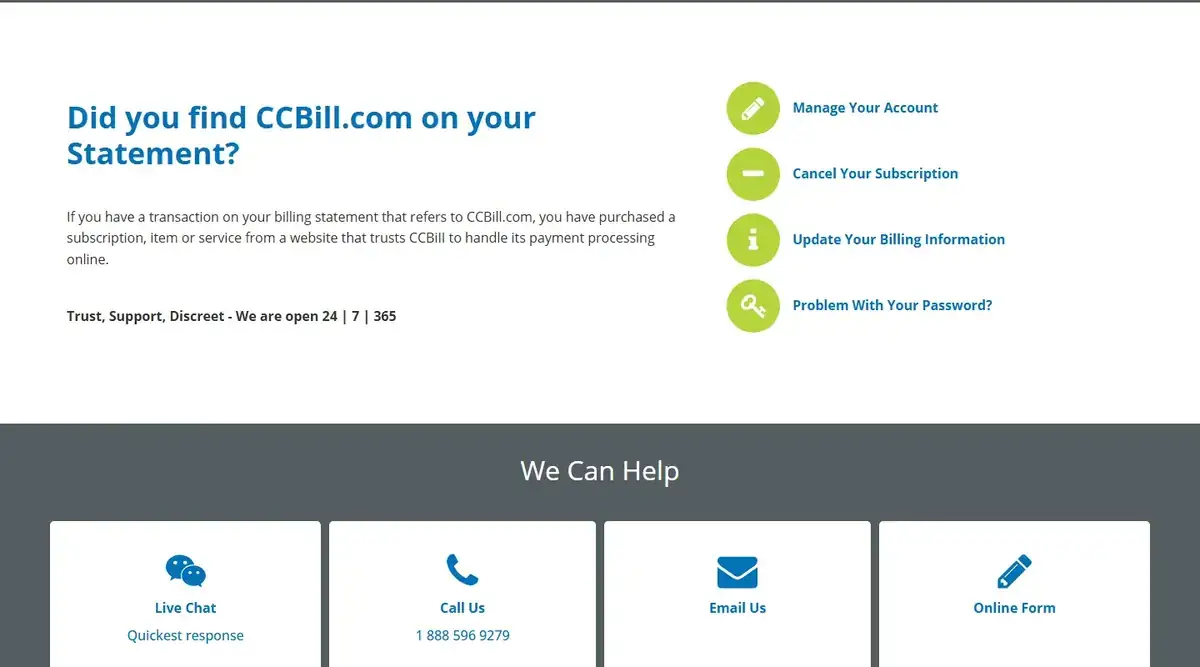
If a legitimate subscriber cannot quickly find cancellation or billing support, the issuer becomes the easiest support channel. Adult processors such as CCBill explicitly operate buyer support and subscription lookup/cancellation flows; even when your processor handles this layer, your own site should still explain where the customer needs to go.
- provide a clear cancellation path;
- confirm that cancellation was received and when access/billing ends;
- show a reachable billing-support route;
- do not create cancellation loops or unnecessary retention friction;
- record support and cancellation events so later disputes can be understood.
2. Reduce fraudulent card-not-present transactions
Once billing is clear, the next layer is deciding which transactions should be approved at all. The exact controls depend on the processor, gateway and merchant-account model, but adult/high-risk stacks commonly combine network authentication with processor risk scoring and merchant-level rules.
Use 3DS as one control, not the whole strategy
3D Secure can authenticate the cardholder in supported flows and can materially change fraud risk or liability treatment depending on the transaction, card scheme and regulatory context. It does not prove that the customer will remain satisfied, remember a rebill or never claim a cancellation/service problem.
That distinction matters for subscription businesses: a strongly authenticated first purchase can still be followed by non-fraud disputes later in the lifecycle.
Combine signals before applying hard rules
Depending on what your processor exposes, useful inputs can include:
- AVS/CVV results;
- 3DS outcome and authentication data;
- device, IP and geography consistency;
- transaction velocity;
- duplicate accounts, payment methods or signup attempts;
- unusual purchase/rebill patterns;
- known bad-account or fraud signals from the processor.
Avoid a rule set that simply blocks every unusual customer. False positives cost revenue too. Review decline/approval data by segment and use manual review only where the transaction value and risk justify the operational cost.
3. Use pre-dispute alerts and purchase clarity before escalation
The most important conceptual shift is that not every bank complaint needs to arrive as a completed chargeback. Visa and Mastercard both operate post-purchase/dispute products designed to move useful information or resolution earlier in the lifecycle.
Visa / Verifi
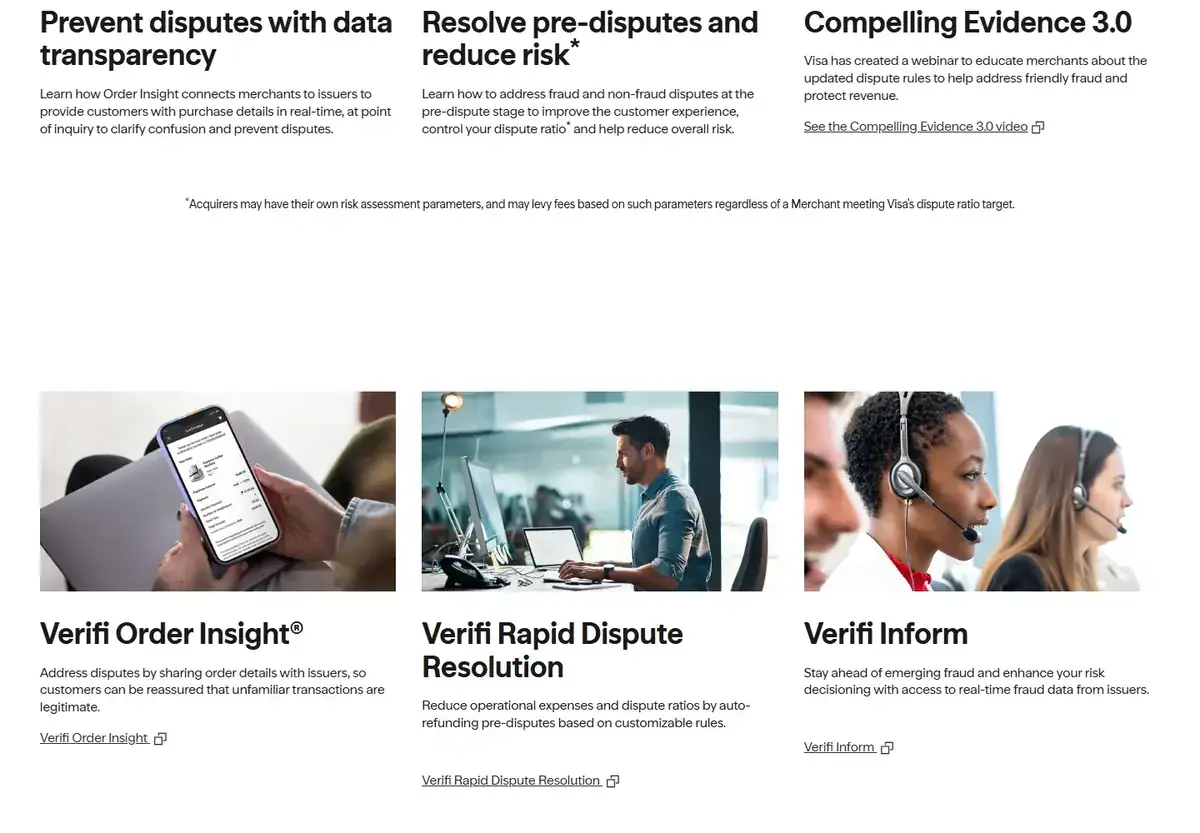
Visa currently positions Order Insight as a way to share transaction details with issuers so unfamiliar purchases can be clarified, and Rapid Dispute Resolution (RDR) as rule-based automatic resolution of eligible pre-disputes. The merchant decides the rules available through its implementation rather than manually reviewing every eligible case.
Mastercard / Ethoca
Ethoca Alerts uses near-real-time fraud and dispute information from participating issuers so merchants can respond before escalation. Mastercard also separates purchase-clarity tools from alert/dispute products, which is useful operationally: helping a customer recognize a legitimate payment and deciding to refund a disputed payment are different jobs.
Do not treat an alert as free money saved
An alert-driven refund can prevent an eligible dispute from becoming a normal chargeback, but the merchant gives up the transaction revenue and may also pay alert/service fees. Coverage can overlap, and your processor may count or route events differently.
Before turning on automatic resolution, ask:
- Which networks and alert products are actually active for this merchant account?
- Which transaction types are eligible?
- What fee is charged for the alert or resolution?
- Can one transaction generate multiple signals, and how are duplicates handled?
- Does the processor automatically cancel a related subscription after a fraud alert/refund?
- How do alert refunds appear in reports and APIs?
- Which cases remain suitable for representment instead of automatic refund?
4. Refund or represent? Use a decision rule, not instinct
Two bad extremes are common: automatically fighting every dispute because the merchant believes the customer is wrong, or automatically refunding everything because disputes feel dangerous. A better policy uses the reason, evidence, economics and processor guidance.
| Situation | Likely operational direction | Why |
|---|---|---|
| Clear stolen-card/fraud signal and no defensible authentication evidence | Refund/accept and stop further billing | Protecting more revenue from a transaction you cannot substantiate is usually a poor trade. |
| Customer contacted support before the dispute and cancellation/refund handling failed | Resolve the customer issue and fix the process | The dispute may be a symptom of operational friction, not a representment opportunity. |
| Recognizable legitimate account activity, clear terms and strong transaction/service records | Consider representment | You may have useful evidence, subject to the reason code and processor/acquirer guidance. |
| Low-value transaction where evidence preparation costs more than realistic recovery | Usually accept/refund | Winning the case is not the same as making the case economically worthwhile. |
| Repeated disputes tied to one offer, traffic source, trial or rebill pattern | Fix the root cause first | Case-by-case handling will not solve a structural acquisition or billing problem. |
Representment outcomes depend on the dispute reason, network rules, evidence quality and the specific transaction. Do not use a vendor's advertised win rate as a forecast for your merchant account.
5. Retain evidence before you need it
The worst time to reconstruct a transaction is after the dispute arrives. Decide in advance which records your processor/acquirer can use and how long you need to retain them under your legal, privacy and contractual obligations.
Potentially useful operational records include:
- processor transaction ID, timestamps and amount;
- authorization and authentication results, including relevant 3DS data exposed to you;
- the billing terms and checkout version shown at purchase;
- receipt/confirmation delivery;
- account creation, login and access history;
- service/content-delivery records that are relevant to the transaction;
- customer-support contacts;
- cancellation requests and completion timestamps;
- refund or partial-refund history;
- consent/acceptance records where they are legitimately required and collected.
Do not collect extra sensitive data merely because it might be useful someday. Evidence retention should still follow data-minimization, security and applicable privacy requirements. Your processor/acquirer should tell you which evidence it can actually submit for the dispute types you receive.
How adult payment processors expose these controls
Ethoca, Verifi and 3DS are not necessarily separate SaaS subscriptions you buy directly. Current adult payment stacks show why the commercial path matters.
| Provider | Current first-party signals | What to verify in your contract/setup |
|---|---|---|
| CCBill | Fraud tools including AVS and 3D Secure 2.0; merchant services list RDR, CDRN and Ethoca dispute/chargeback tools; adult billing support references Ethoca and Verifi. | Which services apply to your PSP vs direct merchant-account setup, pricing, countries and reporting behavior. |
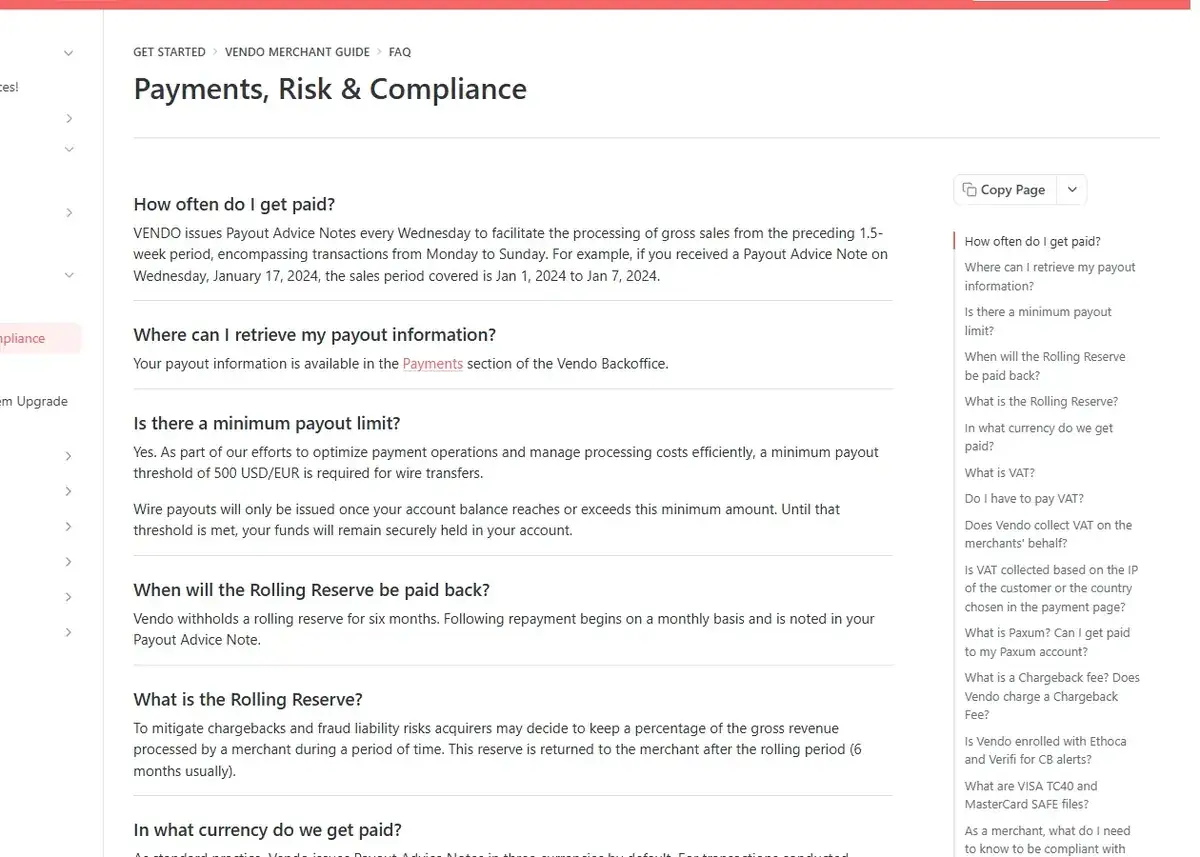
| Vendo | Documentation says Vendo may receive Ethoca/Verifi alerts; transaction types include chargeback, refund, RDR refund, Ethoca Alert, Verifi Alert and verification/3DS events. | Your alert/refund workflow, chargeback fees by acquirer/payment method and which transactions use 3DS. |
| CentroBill | Adult payment pages advertise fraud screening, statement descriptors and chargeback-prevention integrations including Ethoca/Verifi/RDR. | Exact acquiring route, enabled products, commercial terms and whether claimed features are active for your merchant account. |
These are implementation examples, not a new processor ranking. If you need to choose between specialist PSPs, merchant accounts, gateways and crypto routes, use the separate adult payment processing guide.
Monitor the system, not one headline chargeback ratio
A single percentage can hide whether your problem is stolen cards, unclear rebills, one traffic source, one descriptor, one product or a broken cancellation workflow. Build reporting that lets you isolate the cause.
Minimum useful dashboard
- chargeback count and value by period;
- refund count and value;
- pre-dispute alert count, refund value and alert/service cost where available;
- reason-code mix or the clearest processor grouping available;
- fraud vs non-fraud dispute categories;
- first payment vs rebill;
- product/offer, GEO and traffic-source segment where attribution is reliable;
- support contacts and cancellations before dispute;
- representment cases and recovered value;
- processor/acquirer warnings or monitoring notices.
Look for leading indicators
A dispute is a late signal. Earlier signals can include a spike in cancellation requests, more customers asking what a descriptor means, repeated billing complaints, unusual signup velocity or a traffic source producing unusually high refunds. Fixing those patterns can be more valuable than optimizing the final dispute-response workflow.
Ask for the current rules that apply to your account
Visa's current merchant material explicitly notes that acquirers may have their own risk-assessment parameters and fees even when a merchant meets Visa's dispute-ratio target. That is a good reason not to publish or operate around one permanent “safe” number.
Ask your processor/acquirer which current Visa, Mastercard and account-level monitoring rules apply, how the denominator is calculated, whether pre-dispute resolutions affect internal monitoring, and which warning/escalation path they use.
A practical 30-day implementation plan
Days 1–5: map the customer-visible billing journey
- capture the checkout, trial, rebill and cancellation paths as a customer sees them;
- confirm the actual card-statement descriptor;
- make support/cancellation routes visible;
- verify what receipts and confirmations are sent;
- list every place where billing terms differ from what the customer might reasonably expect.
Days 6–10: map transaction controls
- document which fraud screening is owned by the processor and which rules you control;
- confirm where 3DS is used and what result data you can access;
- review duplicate/velocity patterns and obvious false positives;
- separate initial transactions from recurring charges in reporting.
Days 11–17: map pre-dispute coverage
- ask whether Ethoca, Verifi/RDR or other alert flows are enabled;
- document fees, eligible transactions and automation rules;
- confirm whether alert refunds automatically stop future billing;
- make alert/refund events visible in your analytics or reconciliation data.
Days 18–24: create the dispute decision process
- define which cases can be automatically accepted/refunded;
- define when a human should review representment;
- confirm the evidence and deadlines your processor requires;
- assign ownership so disputes are not missed between support, finance and risk teams.
Days 25–30: build the root-cause review
- create the dashboard above;
- identify the two largest preventable reason clusters;
- choose one billing/customer-experience fix and one fraud/risk fix;
- compare the next period against a stable baseline instead of changing everything at once.
Common chargeback-management mistakes
- Using an intentionally unrecognizable descriptor. Discretion is useful; confusion is not.
- Making cancellation harder than buying. Retention friction can become issuer disputes.
- Treating 3DS as complete chargeback prevention. Authentication does not solve service, cancellation or rebill complaints.
- Automatically refunding every alert without measuring economics. Prevention still has refund and service costs.
- Fighting every dispute. Evidence quality and transaction value differ case by case.
- Tracking only the final chargeback percentage. It hides the reason and the point in the funnel where the problem starts.
- Copying a fixed “safe ratio” from a third-party article. Current network and acquirer rules must be checked for the merchant's actual setup.
- Buying a chargeback tool before confirming adult-payment compatibility. A dispute product does not make an otherwise incompatible processor willing to board an adult merchant.
FAQ
What is the difference between a refund and a chargeback?
A refund is initiated through the merchant/processor to return a payment. A chargeback is a card dispute initiated through the cardholder's issuer. Resolving a legitimate complaint directly before a formal dispute is usually operationally cleaner, but the correct action depends on the case and your processor's rules.
Can Ethoca or Verifi prevent every chargeback?
No. They can help with supported pre-dispute/alert flows, but coverage depends on the issuer, network, processor/acquirer integration and transaction. Some disputes will still arrive through normal chargeback processes.
Do adult merchants buy Ethoca and RDR directly?
Sometimes the commercial relationship is indirect. Adult processors such as CCBill and Vendo expose Ethoca/Verifi-related functionality inside their own payment stack. Ask your provider which products are actually enabled, how they are priced and how events appear in reporting.
Does 3D Secure eliminate fraud chargebacks?
No. 3DS is an authentication control and can materially change fraud handling in supported flows, but its effect depends on the transaction and scheme rules. It does not eliminate other dispute categories such as cancellation, service or subscription complaints.
Should I automatically refund every pre-dispute alert?
Not necessarily. Automatic resolution can be useful when the transaction value, alert economics and evidence make a refund the rational choice. Higher-value or well-documented transactions may justify a different rule. Configure automation with your processor/acquirer rather than assuming one policy fits every merchant.
What chargeback ratio is safe for an adult business?
There is no evergreen universal number ABH can responsibly give you. Card-network monitoring programs and acquirer policies change, and Visa explicitly notes that acquirers can apply their own risk parameters. Ask your processor/acquirer for the current thresholds and calculation method that apply to your account, then monitor the underlying reasons as well as the ratio.
Methodology and primary sources
This guide was researched and rechecked on October 20, 2026. We use card-network sources for network products/rules and processor documentation only for the capabilities those providers currently advertise or document. Vendor performance percentages are not treated as portable evidence for another merchant.
- Visa Post-Purchase Solutions for merchants — Order Insight, Rapid Dispute Resolution and current acquirer-risk caveat.
- Mastercard Ethoca Alerts — current pre-dispute/alert positioning.
- Mastercard Dispute Management — separation of purchase clarity, alerts and end-to-end dispute management.
- CCBill Merchant Services and CCBill Adult Business — 3DS/fraud controls and current Ethoca/Verifi/RDR/CDRN implementation signals.
- Vendo Payments, Risk & Compliance and Vendo transaction types — alert enrollment, 3DS and reporting event types.
- CentroBill Adult Payment Gateway — processor-level fraud, descriptor and pre-dispute implementation claims, treated as vendor statements.
Commercial availability, fees, card-network rules and processor/acquirer risk policy can change. Recheck them against your current contract and provider documentation before implementing automation.